

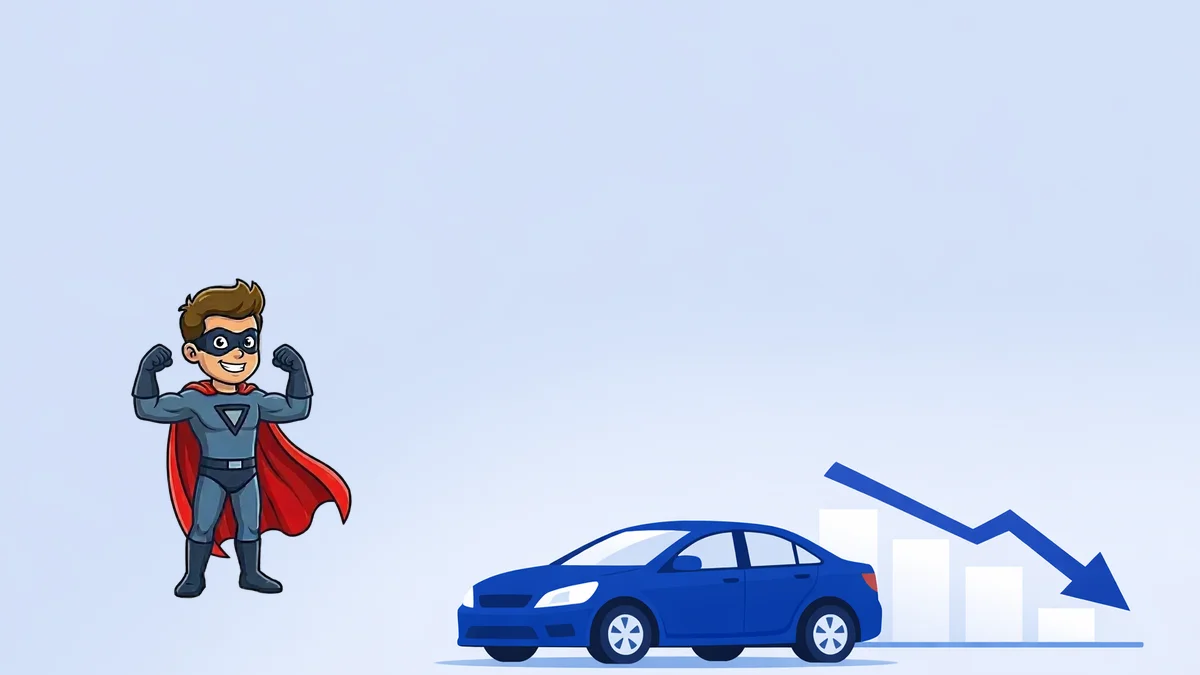
Why Your Volkswagen Atlas Depreciates
Your 2026 Volkswagen Atlas will lose value for several key reasons. Like most new vehicles, it loses about 20% of its value in the first year alone. After five years, expect to retain roughly 50-60% of what you paid.
Main Depreciation Drivers
New vehicle value drop: The biggest hit happens immediately. New cars depreciate fastest during year one as buyers shift to used models.
Used market oversupply: Three-row SUVs are popular, but that means more used inventory. More supply equals lower prices for each vehicle.
Competition from rivals: The Atlas competes with the Toyota Highlander, Honda Pilot, and Kia Sorento. When competitors offer similar features at lower prices, Atlas values drop.
Maintenance and repair costs: The Atlas has higher-than-average maintenance expenses. Potential buyers factor this in when valuing used models. A transmission replacement costs nearly $4,700, and engine work runs around $7,600. These repair costs scare away used buyers and lower resale prices.
SUV market trends: Gas prices, fuel economy preferences, and shifting consumer demand affect how quickly the Atlas depreciates. Economic downturns also hit SUV values harder than compact vehicles.
Mileage accumulation: Your Atlas loses value with every mile driven. After 75,000 miles over five years (15,000 annually), depreciation accelerates faster.
What You Can Control
You can't stop depreciation, but you can slow it. Regular maintenance records increase resale value by 5-10%. Keep service receipts showing oil changes, tire rotations, and fluid checks. A well-maintained Atlas with documented history outsells a neglected one.
Minor cosmetic maintenance matters too. Clean interior, no stains, and working electronics preserve value better than worn-out versions.
The Bottom Line
Your Atlas depreciates because it's a new vehicle entering a competitive used market with real ownership costs. Understanding this helps you plan ahead and make smarter ownership decisions.