

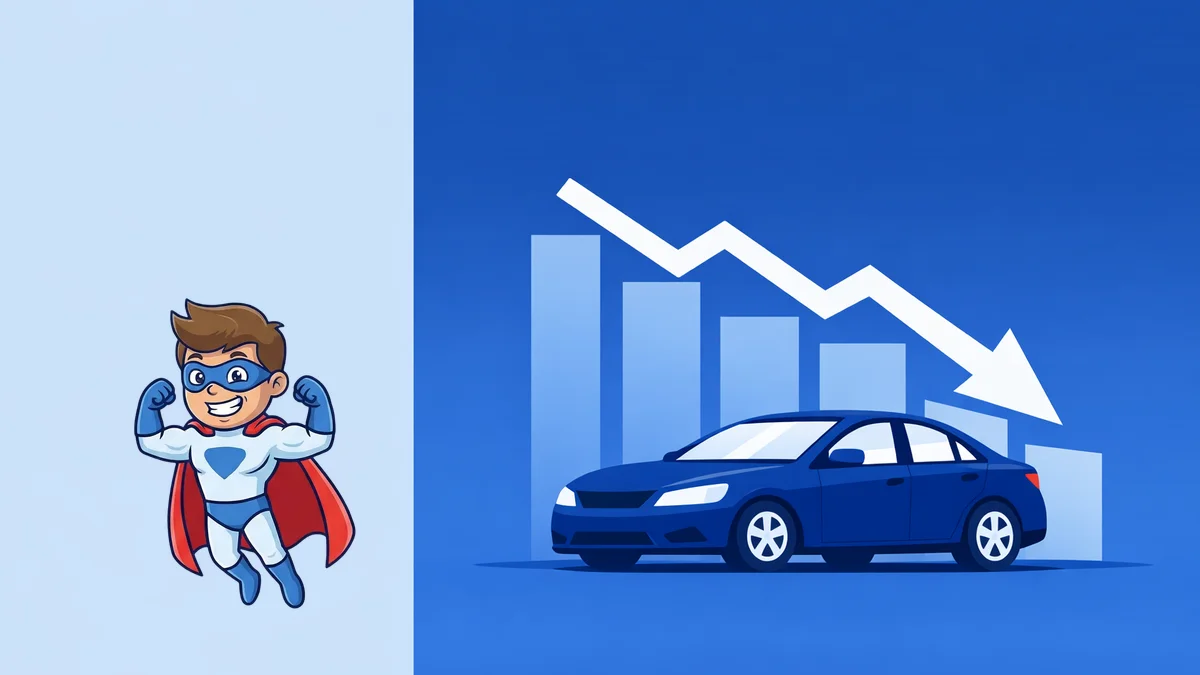
Your 2018 sedan depreciates slower now than it did when it was new. Most sedans in their 6-8 year range lose between $800 and $1,200 annually in value.
Here's what affects your car's depreciation:
| Factor | Impact on Value |
|---|---|
| Mileage | Higher miles = faster depreciation |
| Condition | Accidents and damage reduce value |
| Model popularity | Popular models hold value better |
| Market demand | Used car prices fluctuate seasonally |
Why older cars depreciate slower
New vehicles lose 20% of their value in year one. By year six or seven, depreciation slows dramatically. Your 2018 sedan has already passed the steep depreciation cliff. This means each year now costs you less in lost value than the early years did.
According to AAA's 2025 driving costs analysis, depreciation remains the single largest ownership expense across all vehicle ages. However, for vehicles like yours that are several years old, the annual depreciation hit is significantly lower than new cars.
How to minimize depreciation
Keep detailed maintenance records. Cars with documented service history sell for more. Clean your vehicle regularly and fix small issues before they become big ones. Avoid high-mileage driving when possible. Each mile adds up and buyers notice odometer readings.
If you're planning to sell or trade in your sedan soon, get it appraised now. Used car values can shift based on fuel prices, interest rates, and seasonal demand. Spring and early summer typically bring higher prices for used vehicles.
Track your car's value
Sidekick tracks your vehicle's estimated value and shows how much you're spending on depreciation each month. Understanding your depreciation helps you make smarter decisions about keeping, selling, or trading in your car.